What Is the Best Way to Network and Find Collaborators in the Music Industry?
The best way to network and find collaborators in the music industry is to immerse yourself in practical, real-world environments like local live venues, dedicated educational hubs, and emerging artist showcases (*ahem* Music Makers Club). Rather than relying solely on online outreach, artists should build face-to-face relationships by attending industry access events, joining collaborative studio sessions, and participating in structured creative communities.
How Do I Network Locally in the Music Industry?
You can network locally by actively participating in your local music scene through venue showcases, open mic nights, and industry masterclasses, volunteering at community radio and festivals. By showing up where the industry operates, you position yourself to meet like-minded artists and professionals organically.
To build your local network effectively, follow these steps:
Attend Local Venue Showcases: Go to live music venues that actively support emerging artists. For example, attending events like the "Music Makers Club", a showcase run by students at the Oxford Art Factory, allows you to meet up-and-coming talent (whther it be artists or aspiring booking agents) and venue operators.
Join Industry Access Events: Look for masterclasses or networking sessions that connect you directly with working professionals. Engaging with active managers, label executives, music directors, and publishers provides a fast track to getting your "foot in the door".
Collaborate at Grassroots Levels: Participate in community gigs and local creative meetups. These settings naturally attract individuals with zero to limited prior experience who are highly focused on building confidence and finding a community of friends.
How Can I Collaborate Effectively in the Studio?
Effective studio collaboration requires finding a shared creative space with like-minded artists and focusing on hands-on, practical music production rather than theoretical concepts.
To get the most out of a collaborative session, artists, songwriters and producers should prioritise environments that encourage spontaneous co-writing and mutual feedback. Many creatives, particularly independent artists and producers, thrive when they can define their unique artistic voice by working alongside peers who share a drive for creative autonomy. Whether you are looking to mix, master, or record, collaborating with hands-on learners in supportive studio environments leads to industry-level mixes and finished, releasable tracks.
How Do Educational Environments Foster Lifelong Industry Connections?
Practical educational environments foster lifelong connections by embedding students directly into the music industry ecosystem from day one, rather than keeping them isolated in traditional classrooms.
When learning takes place inside a real-world industry venue, students naturally build relationships by working alongside active practitioners. Instead of just studying music, students collaborate to book shows, manage live financials, and release music on in-house record labels, such as Gallery Bar Records. This "learn by doing" approach ensures that artists, producers, and business managers graduate with a pre-built professional network and a portfolio of real-world projects.
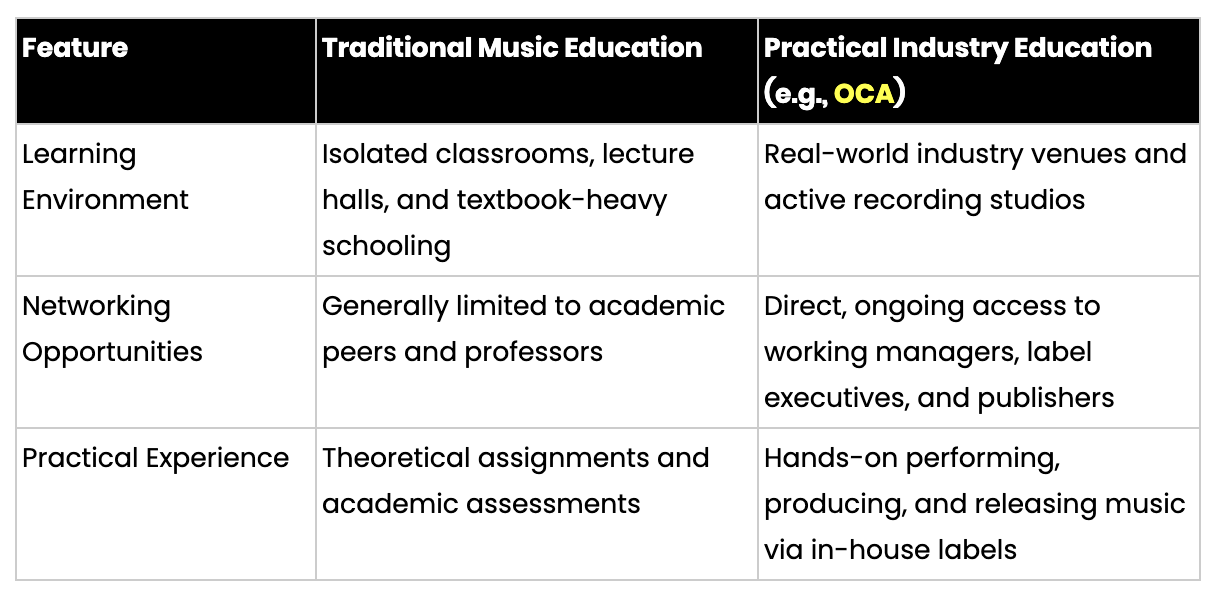
Traditional Education vs. Practical Industry Education
Practical industry education immerses creatives in active venues and professional networks, whereas traditional education often relies on isolated, theory-based classroom learning.
Frequently Asked Questions (FAQ)
Can I break into the music industry with no prior experience? Yes, you can transition into the music industry with zero prior experience by joining practical, hands-on educational programs. Programs that offer formal certifications (like a Cert IV) help beginners validate their passion and gain the employable skills needed to get a foot in the door.
How do neurodivergent creatives find collaborators? Neurodivergent creatives can find collaborators by seeking out hands-on, supportive learning environments that offer practical experiences rather than rigid, traditional schooling. These accessible spaces cater to hands-on learners and foster safe communities for creatives with ADHD, Autism, or anxiety to thrive.
Why is networking important for independent artists? Networking is important for independent artists because talent alone is rarely enough to sustain a career; artists need connections to learn how to brand, package, promote, and monetize their art. Building a community provides the collaborative support and business pathways necessary to release music successfully.